The question of whether to choose a hard mattress or a soft mattress is one of the most important considerations for users, especially those experiencing back pain, when selecting a mattress. In the past, it was thought that anyone with back pain should sleep on a mattress as hard as possible, but mattress comfort cannot be explained solely by the level of firmness. Body weight, sleeping position, the support system of the mattress, and how the spine is positioned during sleep are just as important as firmness.
A very hard mattress can create pressure in the shoulder, waist, and hip areas of some users, while an excessively soft mattress can cause uncontrolled sinking of the body into the mattress. Therefore, the right mattress for back pain is not just defined as hard or soft; it is the mattress that provides balanced support for the body and helps maintain the natural posture of the spine.
In this guide, you will find the differences between hard and soft mattresses, mattress firmness selection according to sleeping position, and the key points to consider when buying a mattress for back pain.

Mattress firmness refers to the surface resistance felt when lying on the mattress. A soft mattress envelops the body more, while a hard mattress creates less flex on the surface. However, the firmness of a mattress does not mean the same as the support it offers.
A mattress with a soft surface can provide balanced support for the body thanks to the spring and foam system inside. Similarly, a mattress that feels hard but does not adequately conform to body contours may not offer a comfortable sleep.
Mattress firmness is generally evaluated at the following levels:
Firmness definitions used by brands may vary. Therefore, instead of just looking at the "firm" or "medium-firm" expression in the product description, it is necessary to examine the spring system, foam layers, and surface structure of the mattress.
Hard mattresses ensure that the body sinks less into the mattress surface. Especially users with high body weight or those who sleep face down may feel more balanced support in a mattress suitable for their needs.
However, a hard mattress is not the right choice for every user. If there is not enough flex in protruding areas of the body such as the shoulders and hips, the pressure feeling may increase. Especially side sleepers may experience discomfort in the shoulder and hip areas in a mattress that is too hard.
It should be remembered that the degree of firmness is personal. A mattress that feels medium-firm for one user may feel quite firm to a lighter user. Therefore, body weight and sleeping position should be evaluated together when choosing a mattress.
Soft mattresses envelop the body more prominently and allow more flex in the shoulder and hip areas. This feature can provide comfort, especially for side sleepers and those with lighter body types.
However, softness should not be confused with a loss of support. A quality soft mattress can offer a comfortable feeling on the surface while balancing body weight with its internal support system. A mattress that is too soft or has lost its support over time may cause the lower back and hip area to sag downward.
When preferring a soft mattress, attention should be paid not only to the top surface of the mattress but also to the support foam and spring system underneath. Even if the surface is soft, it is important to support the lower back in a controlled manner.
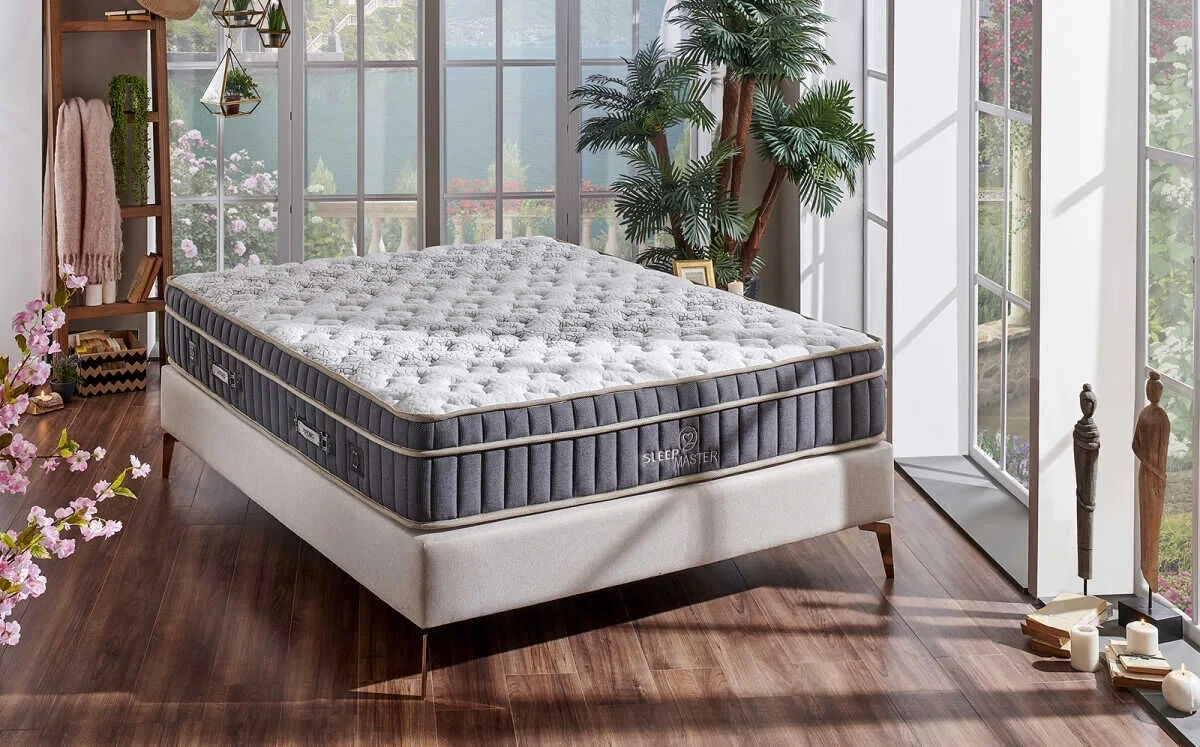
Sleep Master Mattress, with its soft structure and pocket spring system, offers a sleep surface that envelops the body. The high-density support foam helps maintain the feeling of softness while supporting the body in a balanced manner.
There is no single mattress firmness that applies to everyone experiencing back pain. The cause of the pain, the person's body structure, sleeping position, and the condition of the current mattress can affect the right choice. However, the notion that very hard mattresses are always healthier is incorrect.
The main goal when choosing a mattress for back pain is to keep the spine in a position close to its natural posture throughout sleep. If the mattress is too hard, the lower back may not be adequately supported, and pressure may form in certain areas of the body. If it is too soft, the lower back and hip area may sink excessively into the mattress, disrupting the natural alignment of the spine.
Therefore, medium-firm mattresses can be a balanced option for many users, offering a balance between support and surface comfort. However, it should not be forgotten that the definition of "medium-firm" does not create the same feeling for everyone. As the user's weight increases, the mattress may feel softer; as the weight decreases, it may feel firmer.
If back pain persists, worsens, spreads to the leg, or is accompanied by symptoms such as numbness and loss of strength, one should not rely solely on changing the mattress and should consult a healthcare professional. Mattress selection does not replace medical evaluation or treatment.
Medium-firm mattresses aim to allow the body to adapt to the mattress in a controlled manner while preventing the lower back and hip areas from excessively descending. This balance can provide an advantage for users who want to move comfortably in different sleeping positions.
In a medium-firm mattress, the surface layer adapts to pressure points such as the shoulders and hips, while the spring or support foam counteracts the main body weight. Thus, instead of providing just a hard surface, the mattress can create a supportive and comfortable sleep surface.
Relax Fit Mattress, with its medium-firm structure and independently operating pocket spring system, aims to offer balanced support. Thanks to its high-density support foam, breathable knitted fabric, and removable cover, it can be considered by users seeking support, freshness, and ease of maintenance together.
A medium-firm mattress can be a suitable starting point for the following users:
The points where body weight contacts the mattress surface during sleep change according to the sleeping position. Therefore, the most frequently used sleeping position should definitely be considered when choosing mattress firmness.
In the side sleeping position, body weight is mostly concentrated in the shoulder and hip areas. If the mattress is too firm, pressure can form in these areas, and the middle section of the spine may move away from its natural alignment.
Side sleepers can generally consider soft, medium-soft, or medium-firm surfaces that allow the shoulder and hip to settle into the mattress in a controlled manner. However, the mattress should not leave the lower back unsupported or cause excessive sinking of the hip.
In back sleeping, the head, shoulders, back, lower back, and hip areas need to be supported in a balanced manner. On a very soft mattress, the hip area may sink down; on a very firm mattress, the lower back may not be adequately supported.
Therefore, medium or medium-firm mattresses may be suitable for back sleepers. It is important for the mattress to support the natural curve in the lower back area and distribute body weight evenly on the surface.
In stomach sleeping, excessive sinking of the lower back and hip area into the mattress can increase the curve of the lower back. Users who sleep in this position may generally consider medium-firm or firm options that keep the body closer to the surface.
Nevertheless, the height of the pillow used in the face-down sleep position is also important. A very high pillow can adversely affect the neck and spinal alignment.
Users who transition between side, back, and face-down positions throughout the night need a balanced surface that does not make it difficult to move. A very soft mattress that excessively envelops the body can make it difficult to change positions.
These users can consider medium-firm mattresses with pocket spring systems that provide mobility.
The same mattress can be felt at different firmness levels by people with different body weights. A lighter user may feel a medium-firm mattress to be firm because they apply less pressure on the mattress surface. A user with a higher body weight can experience a softer feeling by applying more pressure to the layers of the same mattress.
In double mattresses, if there is a significant difference between the weights of the two users, motion isolation and an independent spring system become more important. Pocket springs can help the mattress on both sides respond separately to applied pressure.
Deciding by only touching the surface of a mattress can be misleading. The materials underneath the surface, which initially feels soft or firm, determine the mattress's true support performance.
The following features should be examined together when selecting a mattress:
Independently operating pocket spring systems can help with different weight points being met and reducing the transfer of movement to the other side of the mattress. High-density support foams aim to create a more balanced ground beneath surface comfort.
Just as mattress firmness, the surface temperature also affects sleep comfort. A user who overheats during the night may wake up frequently or have difficulty finding a comfortable position, even if the mattress is the right firmness.
Breathable knitted fabrics, breathable layers, and pocket spring systems can support air circulation within the mattress. Users whose temperature expectations vary depending on the seasons can also consider mattresses with two functional sides.
Thermo Balance Mattress, with its medium-firm structure and pocket spring system, offers two different usage surfaces, summer and winter. Technology that supports the cooling sensation is used on the summer side, while technology that helps with temperature balance is used on the winter side.

The mattress is not the sole cause of back pain. Daily movement habits, work schedules, prolonged sitting, improper lifting movements, and different health issues can also cause pain. However, a mattress that has lost its form can lead to inadequate support for the body during sleep.
If your current mattress has the following symptoms, the mattress and base should be checked together:
Not every deformation observed in the mattress indicates settling due to manufacturing. Over time, surface softening, the mattress adapting to the user, or slanting due to a damaged base can be different situations. Therefore, the ground used under the mattress should be flat, solid, and compatible with the product size.
One of the most common mistakes made by people with back pain is to choose the firmest mattress directly. An overly firm surface can create pressure in the shoulder and hip areas and prevent adequate support for the lower back.
Sitting on the edge of the mattress does not accurately reflect the feeling experienced during sleep. If possible, the mattress should be evaluated by lying down in the sleeping position that is used most often.
The firmness level stated on the product does not create the same feeling for everyone. How much the mattress flexes under the user's weight must be taken into account.
A damaged, slanted, or mismatched base can prevent even a new mattress from providing the correct support. The carrier base should be checked when changing the mattress.
The right mattress can contribute to sleep comfort, but it does not diagnose or treat the cause of back pain. For long-lasting, recurring, or worsening pain, an expert evaluation should be obtained.
When evaluating a mattress, it is necessary to create an experience close to daily sleep habits. Instead of a few seconds of contact, lying on the mattress for a while helps better understand how the surface adapts to the body.
By comparing different firmness levels and support systems in Alfemo mattress models, you can examine options suitable for your body type, sleeping position, and personal comfort expectations.
There is no single answer to the question of whether a hard or soft mattress is better for everyone. The right mattress is one that adequately supports body weight, supports the natural posture of the spine, and does not create discomforting pressure in the shoulder, lower back, and hip areas.