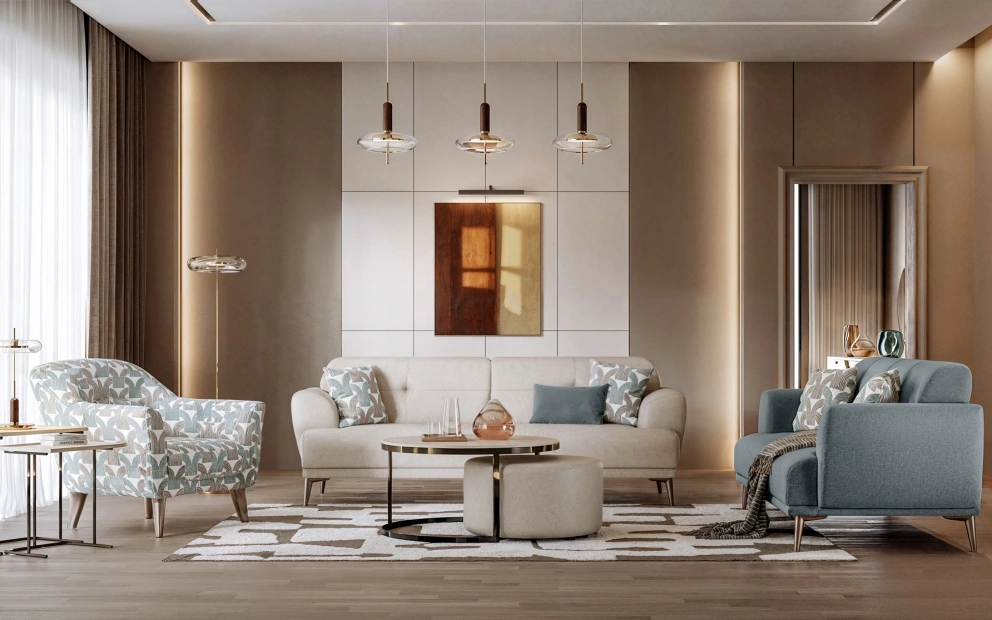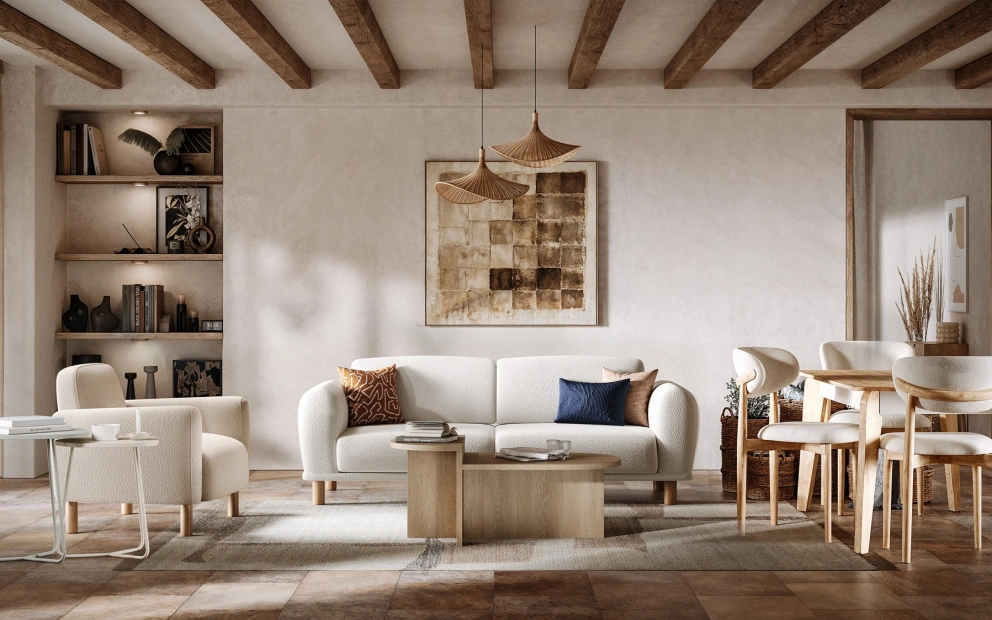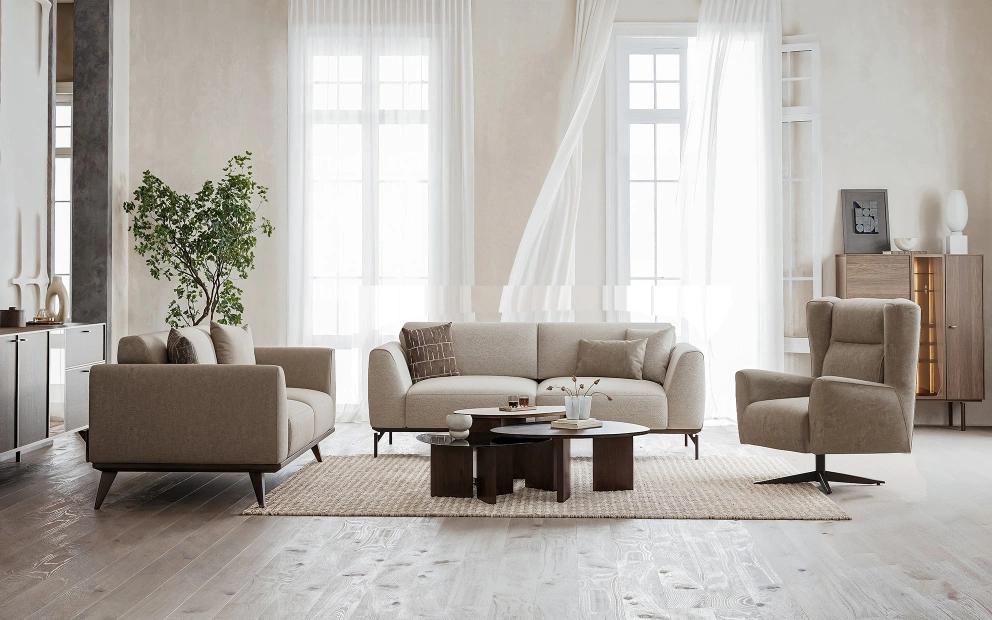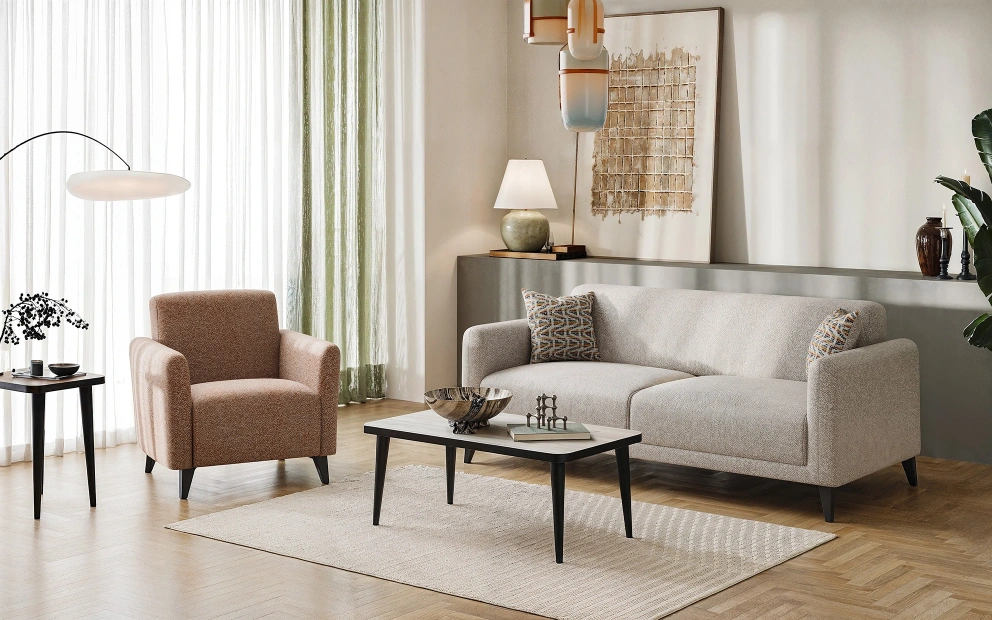



How to Identify Quality Furniture? What You Need to Know Before Buying
Choosing quality furniture directly affects not only the appearance of your home but also your daily comfort and how long you can use your furniture. Two pieces of furniture that appear similar at first glance can be quite different in terms of materials used, connections, surface craftsmanship, fabric structure, and functional details. Therefore, when buying furniture, it's essential to evaluate the entirety of the product rather than deciding based solely on color, design, or price.
Determining your usage habits, room dimensions, and expectations from the product in advance can help with selecting furniture that suits your home. For instance, a durable and wide-seated sofa might stand out for a large family, while functional models that can convert into a bed may be more advantageous in a home with frequent guests. This guide examines the fundamental points that will help you determine the quality of the furniture step by step.
1. Examine the Material Structure of the Furniture
The first step in understanding quality furniture is to learn what materials the product is made of. Not only the externally visible surface of the furniture but also its supporting frame, legs, doors, shelves, and connectors should be evaluated.
For products like wardrobes, consoles, tables, and TV units, the thickness of the frame material, the smoothness of the surface coating, and the workmanship of the edge bands provide important clues. For sofas, the skeleton structure, seat foam, type of fabric, and leg material should be evaluated together.
- Ask about the type and thickness of the material used in the product's frame.
- Check whether the legs rest evenly on the floor.
- Look for swelling, cracking, or color differences in surface coatings.
- Evaluate the suitability of the product's supporting sections for daily use.
- Pay attention to the clear specification of material information in the product description.
The lifespan of furniture is not solely dependent on the primary material used. Proper production techniques, quality connectors, and careful surface craftsmanship also play a decisive role in the product’s durability.
2. Closely Examine Craftsmanship Details
In quality furniture, the transitions between parts are balanced and orderly. There should be no significant level differences between doors, gaps on surfaces, or careless joints at corners. Drawers, doors, and movable mechanisms should be opened and closed a few times for inspection.
Craftsmanship details to check
- Doors should be parallel and equally spaced.
- Drawers should not get stuck when opened or move sideways.
- The edge bands should not have gaps, peeling, or sharp projections.
- Screws and connectors should not be haphazardly visible.
- Handles should be firm and not move when used.
- Stitches should be straight, symmetrical, and taut.
The attention to small details in a piece of furniture gives an idea about the product's overall production quality. Therefore, it is important not only to view the product from a distance but to closely examine the doors, drawers, stitches, and joints.
3. Evaluate the Frame and Seating Comfort of Sofas
When selecting a sofa set, the frame structure and seating comfort are as important as the design. A sofa may feel soft and comfortable at first try; however, quality seating is not judged solely by softness. The foam should support the body, return to its original form shortly after getting up from the seat, and cushions should remain balanced.
If you hear frame noise, creaking, or feel unbalanced movement when sitting on the sofa, you should examine the connection points more carefully. It's also useful to sit on different parts of the sofa to check if it offers similar support at every point.
- Evaluate whether the seat height suits your height and style of use.
- Ensure that the back cushions support the lower back and shoulder area.
- Make sure the seat foam is not excessively soft or overly firm.
- Check if the sofa provides similar comfort in its corner and middle sections.
- Look for permanent depressions on the surface after getting up from the sofa.
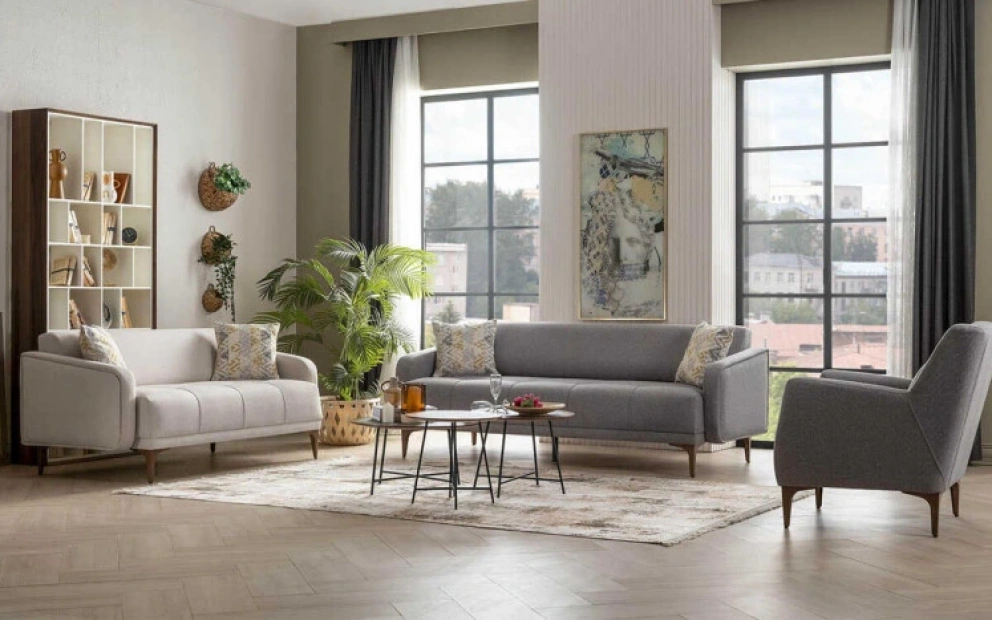
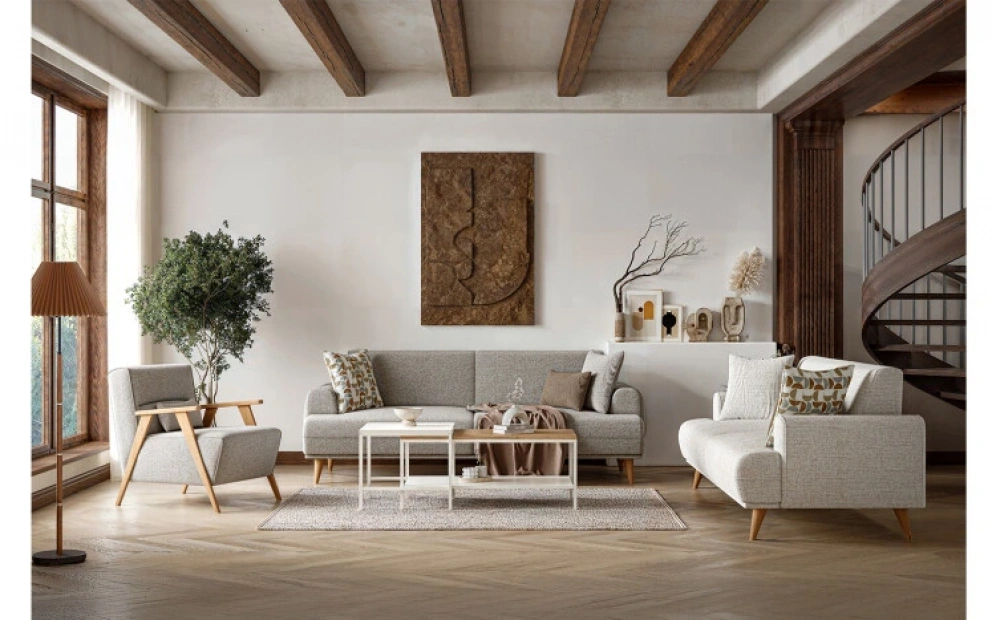
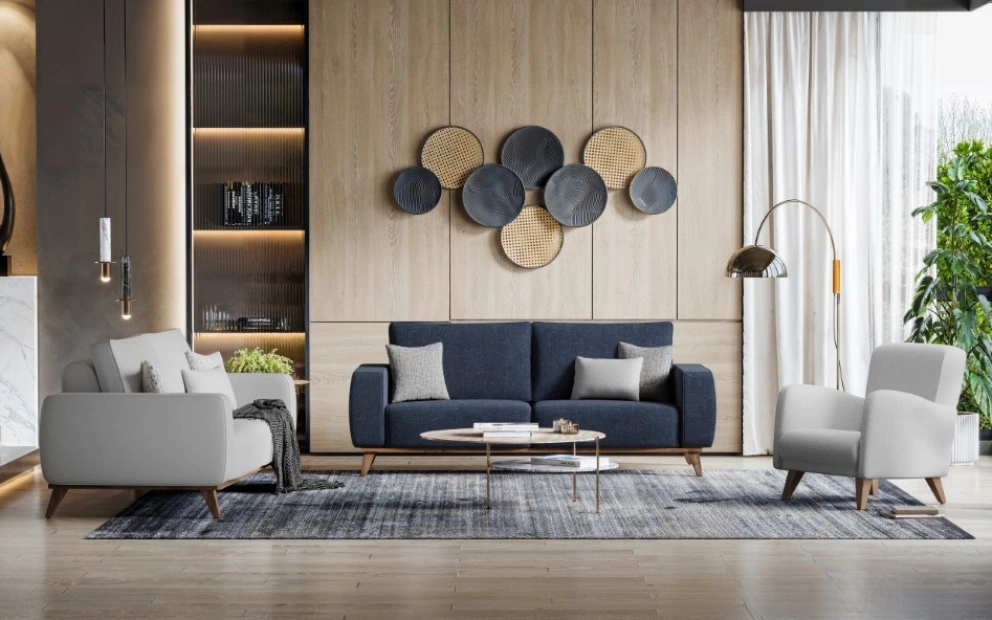
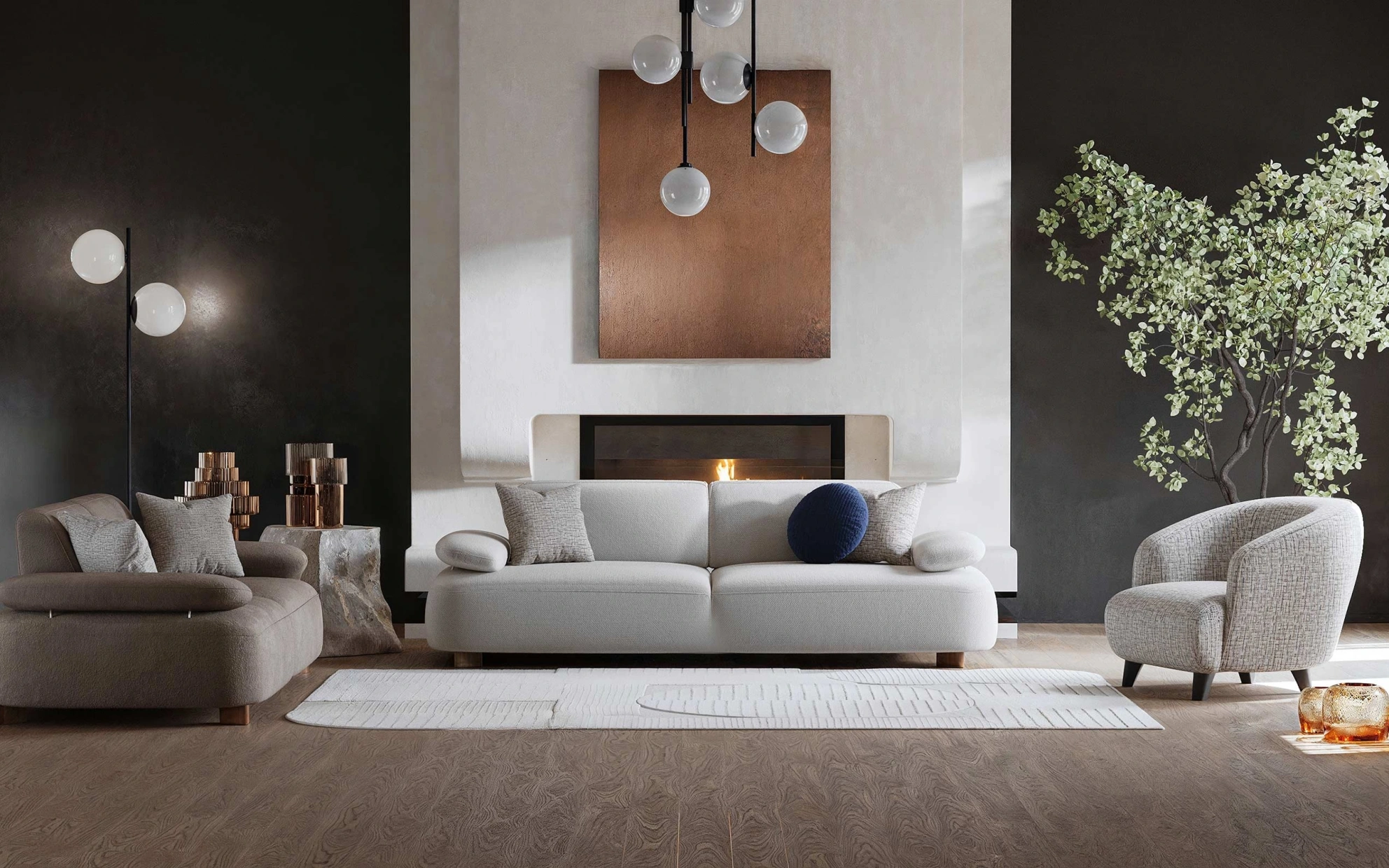
Standing out with its wide seating area and smooth transitional form, the Maya Sofa Set is a good example of evaluating design and daily comfort together in furniture selection.
4. Choose Fabric Quality According to Your Usage Habits
In upholstered furniture like sofas, chairs, and armchairs, fabric selection affects both appearance and usage comfort. Consider not only the color of the fabric but also its texture, ease of cleaning, usage intensity, and the lifestyle in your home.
In homes with children or pets, easy-to-clean, durable for daily use, and practical fabrics for surface maintenance may stand out. In less frequently used guest rooms, textures and decorative appearances that are more dominant may be preferred.
What to consider when examining the fabric?
- Gently stretch the fabric in different directions with your hand to examine its texture.
- Check for fraying or loose threads around the stitching areas.
- Learn about fabric care and cleaning instructions.
- Check how the color appears in natural and artificial light.
- Make sure the type of fabric suits your daily usage frequency.
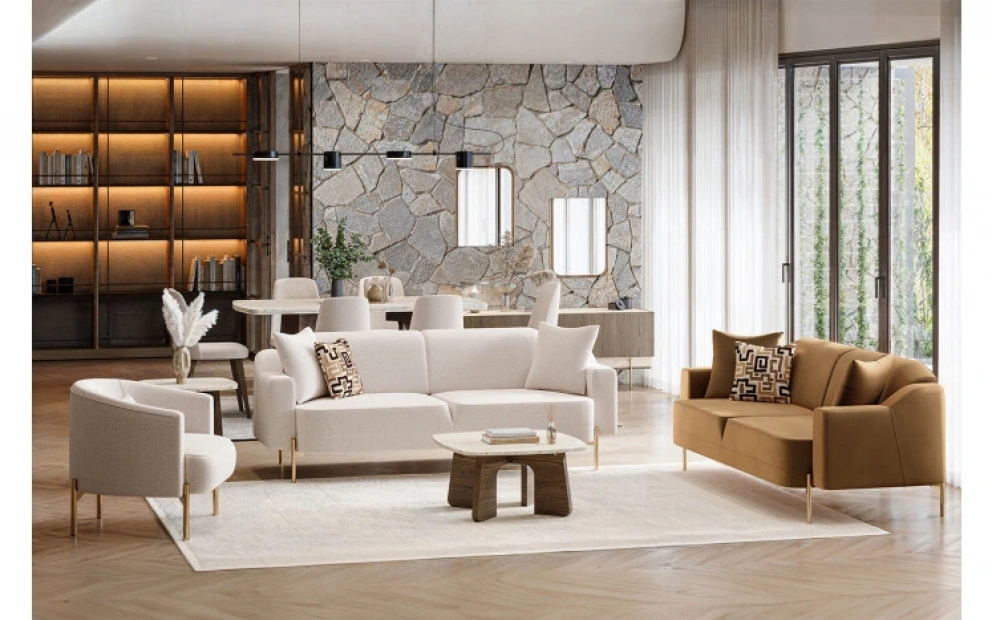
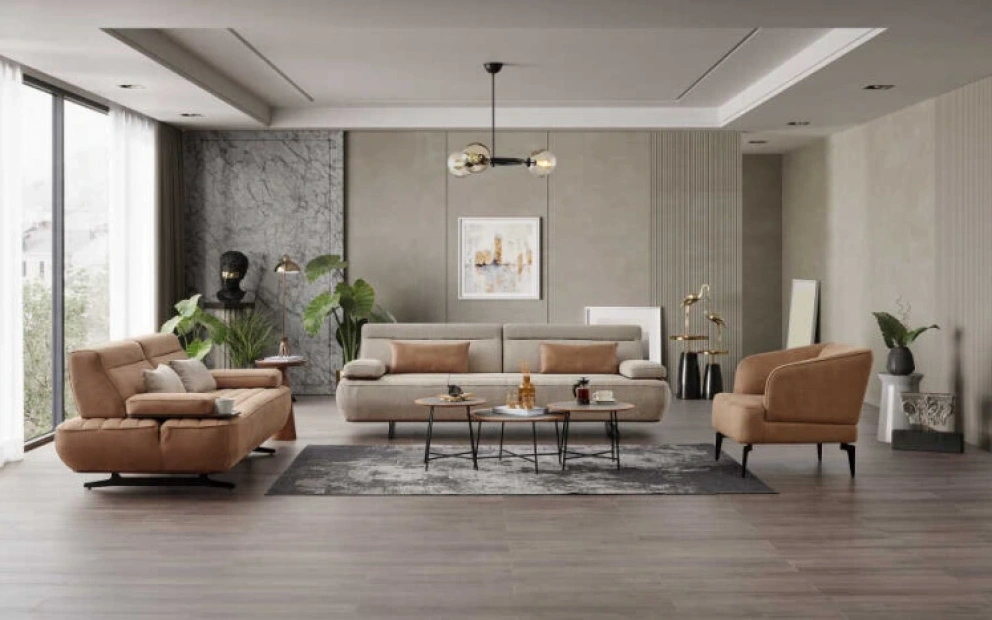
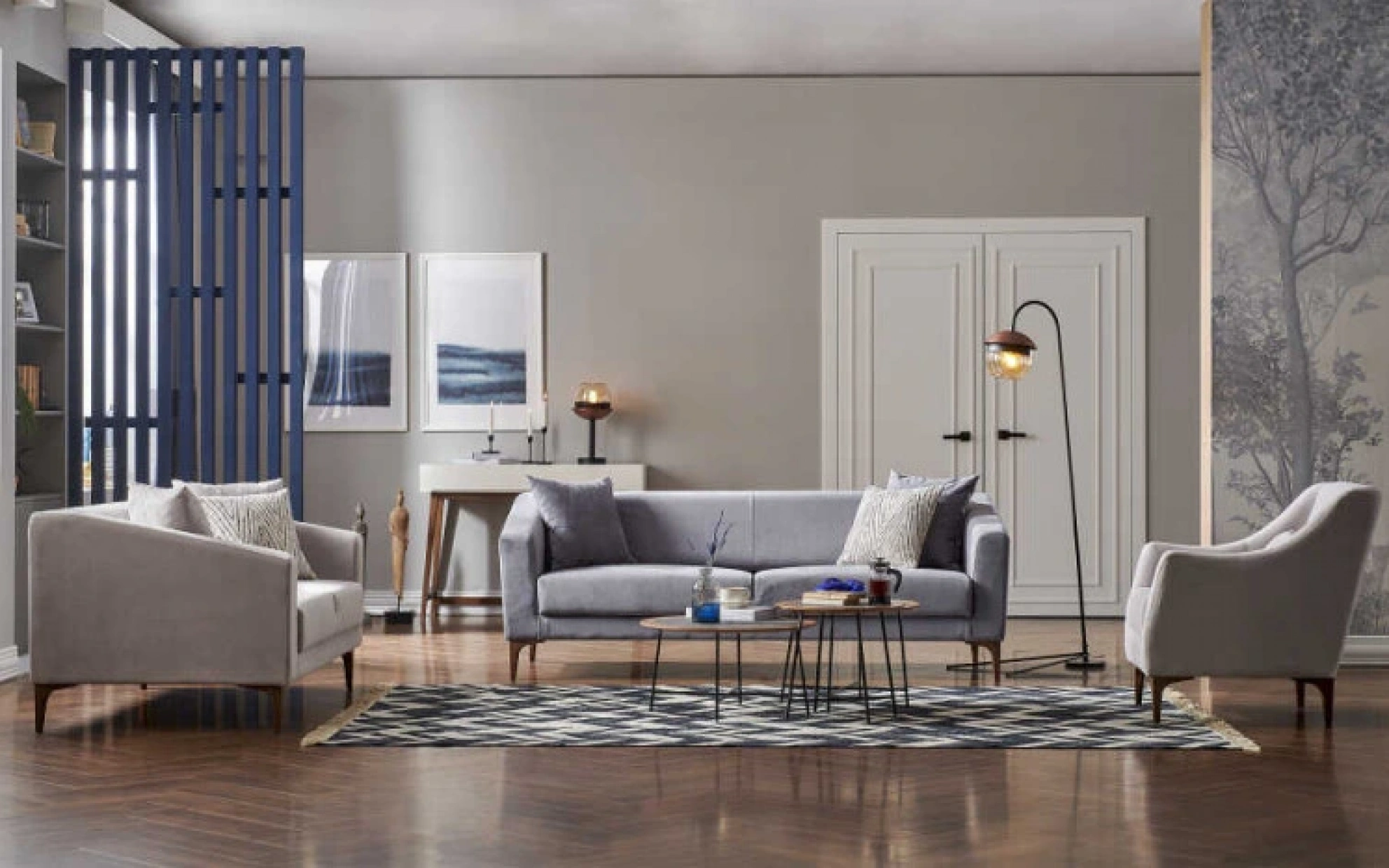
If you're looking for a functional sofa, you can evaluate the mechanism details along with fabric features. The Purina Sofa Set is an option designed to serve different usage needs with the convertible EasyBed mechanism and Nanoskin fabric technology aimed at facilitating surface maintenance.
5. Check the Balance in Tables, Consoles, and Wardrobes
A quality table or wardrobe should stand stably on the floor and not wobble during use. The leg structure, supporting points, and table connections of the product should be carefully inspected. It's especially important that the mechanism operates easily and that table parts remain level when extended, especially in extendable dining tables.
In consoles and wardrobes, the load-bearing capacity of shelves, door hinges, and drawer slides are decisive for daily use. When opening and closing the doors, the furniture frame not moving indicates a balanced setup.
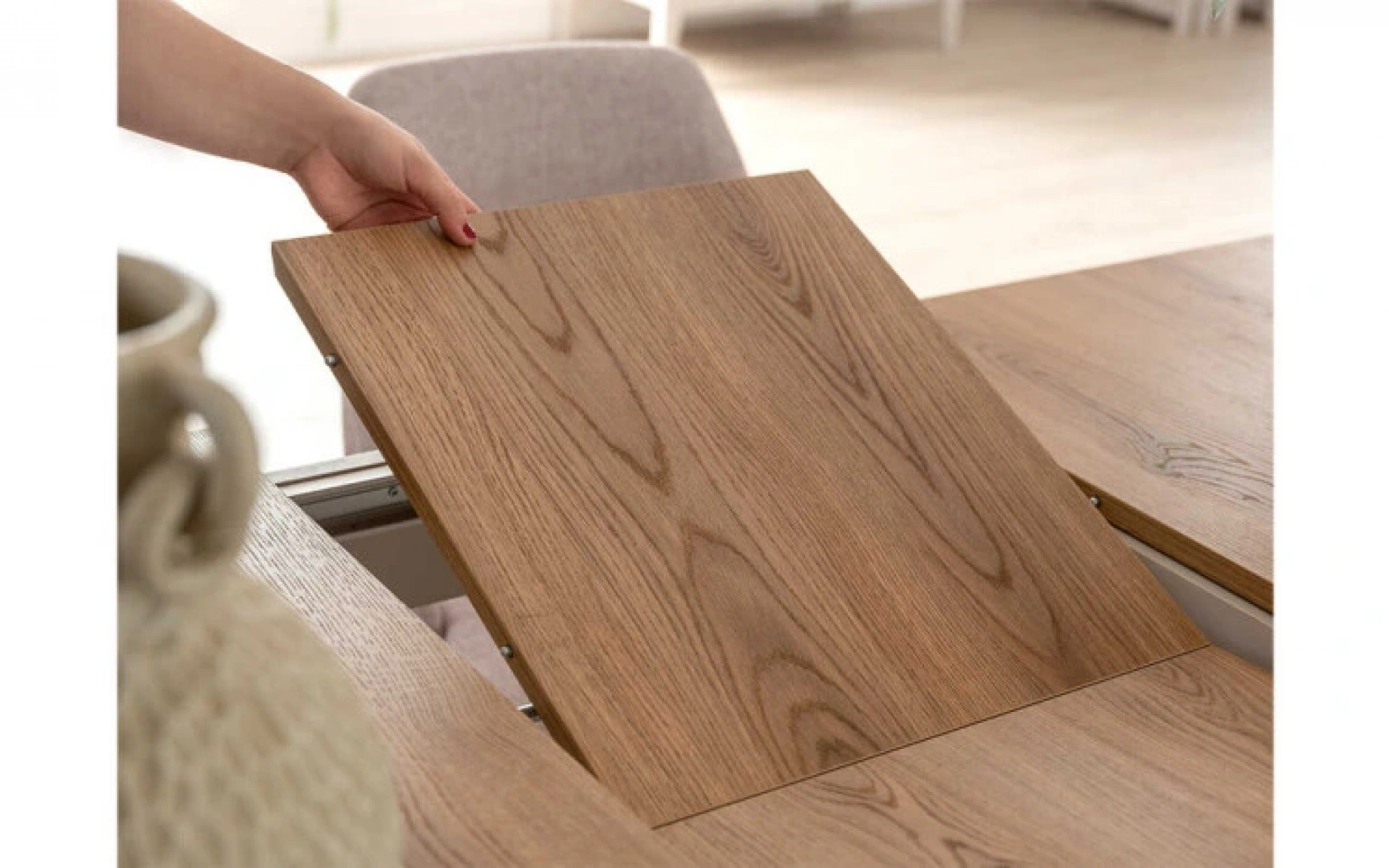
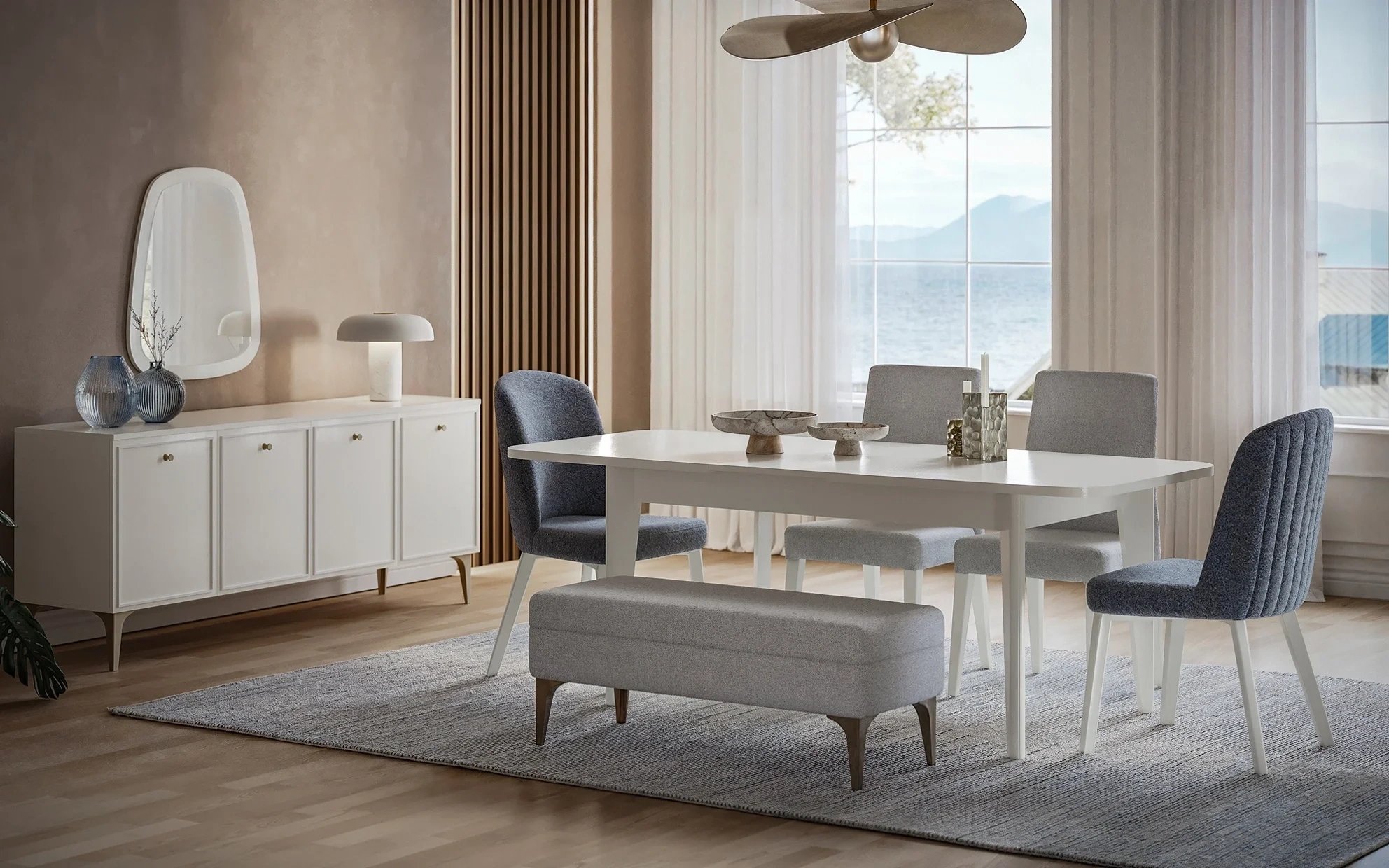
When choosing for your dining area, you can evaluate dining room sets as a whole where table, chair, and console are used together. The Monica Dining Room can be adapted to different spatial dimensions and usage habits with fixed, extendable, and round table alternatives.
6. Consider Whether Functional Features Are Truly Useful
Nowadays, furniture is chosen not only for aesthetic purposes but also to use living space more efficiently. Sofas converting into beds, extendable tables, storage-providing coffee tables, and modular units can simplify daily life. However, having numerous features in a product alone does not mean it's of high quality.
A functional mechanism should be easy to use, not difficult to move, and should not disrupt the balance of the product when closed. Before buying, try the mechanism a few times to check the opening and closing process.
- Can the mechanism be easily used by a single person?
- Is there friction or loud noise when opening and closing?
- Do moving parts remain stable when closed?
- Does the function meet a real need in the home?
- Are the maintenance and usage conditions of the mechanism clearly stated?
7. Compare the Furniture Measurements with Your Living Space
Even very high-quality furniture may not offer comfortable use if it does not fit the room’s dimensions. Therefore, you should definitely check the width, depth, and height measurements of the product before purchasing. You should take into account not only the wall where the furniture will be placed but also the door opening area, passage distances, and the gaps with other furniture.
Things to consider when taking measurements
- Measure the width of the wall where the furniture will be placed.
- Mark the positions of doors, windows, sockets, and radiators.
- Leave enough space around the furniture for comfortable movement.
- Check whether the product can pass through the building entrance, staircase, and doors during delivery.
- Calculate the area that extendable tables and sofa beds will occupy when open.
If you have a spacious living room, you can opt for a comprehensive sofa set. In more limited spaces, corner sofa models can help you use the available space more efficiently.
8. Pay Attention to Timeless and Compatible Design
The quality of furniture is not limited to physical durability. It’s also crucial that the design has a look that can be enjoyed for a long time. Products that are closely tied to very short-term trends and difficult to integrate with the rest of your living space may create a need for decoration changes over time.
You can update the decoration with accessories, textiles, and lighting selections by opting for simple and balanced forms in main furniture pieces. Thus, large parts like sofas, tables, consoles, and TV units can adapt to different decoration styles for years.
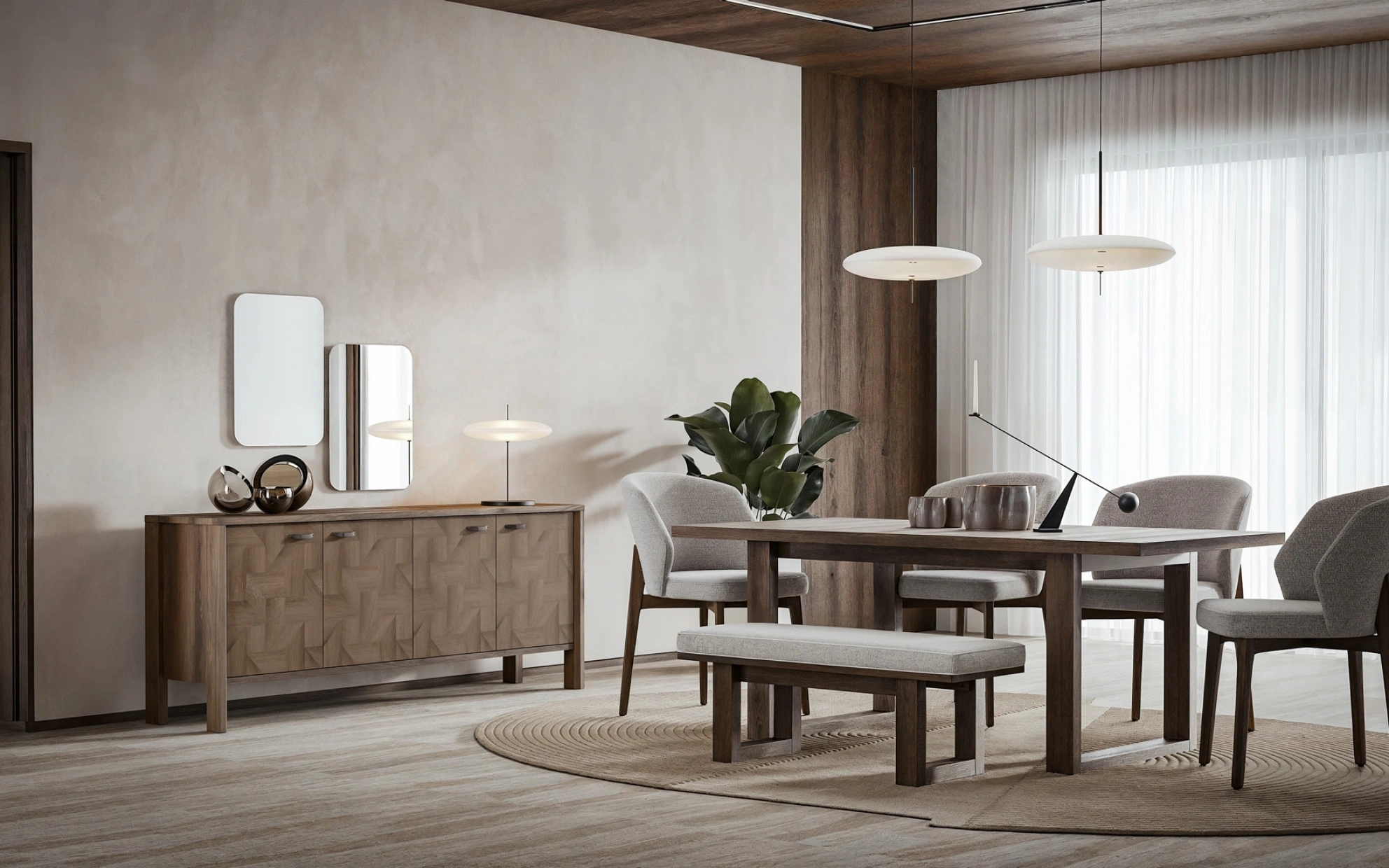
The Montre Dining Room, combining modern and rustic lines, with its thickened wooden legs and different door options, can serve as an example for evaluating material, function, and design details together.
9. Read Product Descriptions and Technical Information
When choosing furniture, product photos are an important starting point but not sufficient on their own. Carefully read the material, dimensions, fabric, leg, mechanism, and usage information provided in the product description.
If the descriptions contain only general expressions, gather the technical details you need from the sales consultant. Obtaining clear information about sofa foam, fabric care, table mechanism, wardrobe internal setup, and product modules, especially, facilitates making the right choice.
10. Evaluate Guarantee, Delivery, and Assembling Process
The quality of furniture is as important as the delivery and assembly process. Proper transportation and assembly of large furniture prevent damage to the connection points. Before purchasing, get information on the warranty period, delivery method, assembly service, and the process to be followed in case of damage.
- Learn about the product's warranty coverage.
- Ask if the delivery time varies depending on stock status.
- Check if the assembly is done by authorized staff.
- Examine the product's surfaces and moving parts during delivery.
- Learn the method of application in case of damage or missing parts.
A Brief Checklist Before Buying Furniture
You can use the following checklist when examining furniture either in a store or online:
- Are the product's dimensions suitable for my living space?
- Are material and fabric specifications clearly stated?
- Do doors, drawers, and mechanisms operate smoothly?
- Does the furniture have a balanced and sturdy structure?
- Does the seating comfort meet my daily usage expectations?
- Are the cleaning and maintenance conditions suitable for my lifestyle?
- Does the product create visual integrity with my other furniture?
- Are warranty, delivery, and assembly conditions clear?
- Will I really use the functional features?
- Do I think I will enjoy using the product for a long time?
Conclusion on Choosing Quality Furniture
Choosing quality furniture doesn’t mean buying the most expensive or the most ostentatious product. Real quality comes from the combination of durable material, careful craftsmanship, balanced design, comfortable use, and functions suitable for needs.
Examining the product in detail before purchasing, reading technical information, and accurately measuring your living space allows you to make a more satisfactory choice in the long run. You can explore furniture for various needs, from your living room to dining area, bedroom to working corner, within the Alfemo collections; evaluate the alternatives that are most suitable for your living space in terms of design, comfort, and functionality.
Frequently Asked Questions
How can quality furniture be identified at first glance?
The smoothness of surfaces, the joints between parts, the operation of doors and drawers, the layout of stitches, and the balance of the furniture are fundamental details that can be checked at first glance. Technical material information must also be examined.
What should be considered when selecting a quality sofa?
The frame structure, seating foam, type of fabric, stitch quality, back support, and dimensions of the sofa should be evaluated together. It’s important that the sofa offers similar comfort at different points and doesn’t make noise during use.
Does price directly indicate quality in furniture?
The price can give an idea about the materials and production details used; however, it is not solely a measure of quality. The material, craftsmanship, mechanisms, warranty conditions, and suitability to your usage needs should be evaluated together.
How is quality controlled when buying furniture online?
Carefully read the product descriptions, dimensions, fabric, and material information. Examine product visuals from different angles and check the warranty, delivery, assembly, and return conditions before purchasing.
What designs should be preferred for long-lasting furniture?
Furniture with balanced proportions, simple lines, and functions suitable for your usage habits can be used with different decoration styles for a long time. Opting for timeless colors and forms in main furniture pieces offers an advantage.
What should be considered in extendable tables and sofa beds?
The mechanism should operate easily, not struggle during movement, and the product should not lose balance when in open position. The area the product occupies when open should also be measured before purchase.
How is furniture measurement correctly taken?
The width of the wall the furniture will be placed against, the passage spaces inside the room, and the positions of doors and windows should be measured together. Checking whether the product can pass through the building entrance and doors during delivery is also important.